Most villa owners assume good audio had to be planned before the plaster went on. If the house is finished, they think, the choice is a soundbar or nothing. In practice a finished UAE villa can usually take a proper whole-home sound system with little disruption, because modern wireless multiroom products need no speaker cabling at all, and the cabling that is still needed can often travel through spaces the building already has.
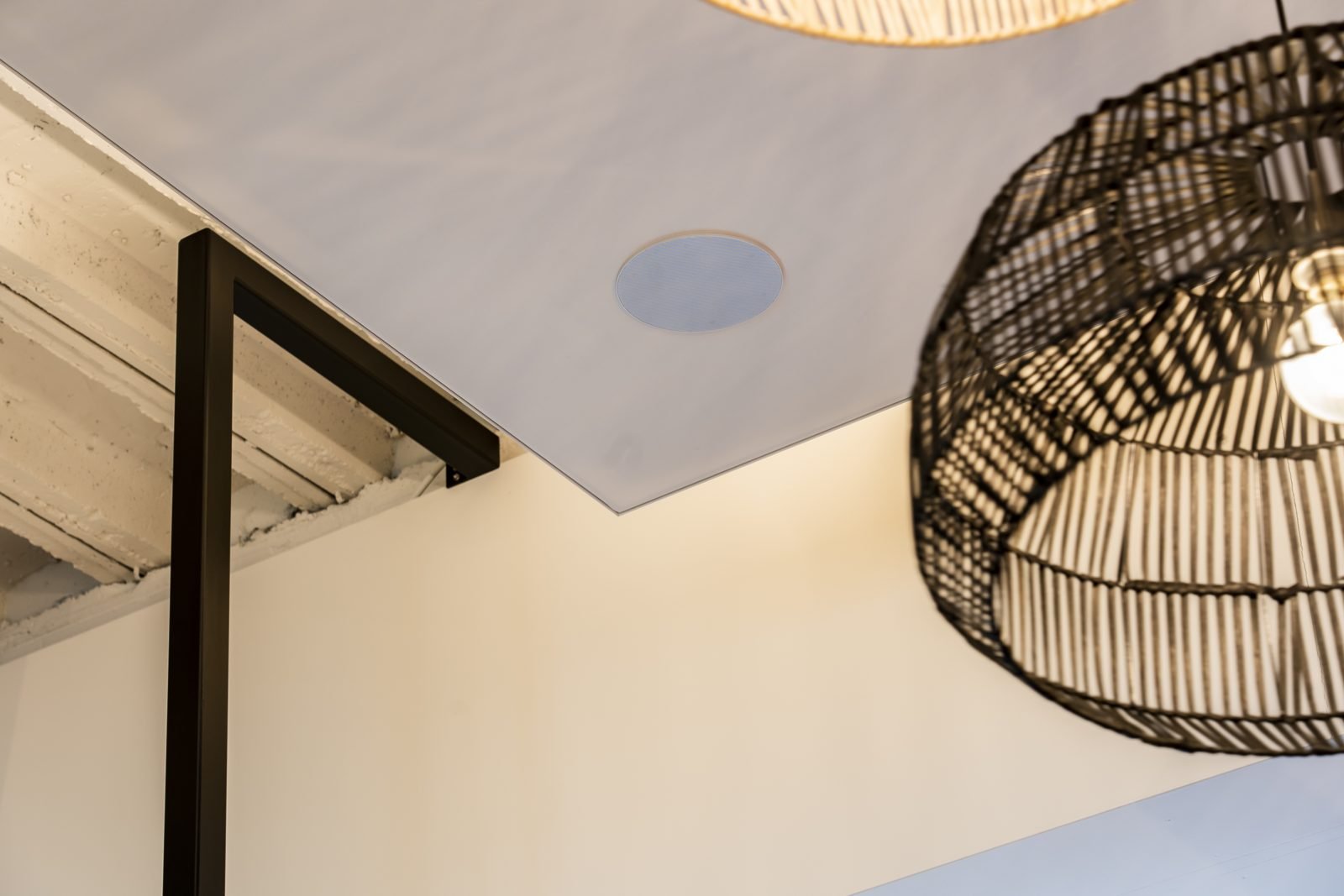
A flush in-ceiling speaker in a finished room: the only visible work is a neat circle in the ceiling.
Why Retrofit Audio Is Easier Than Most Villa Owners Think
Retrofitting is really three separate questions, and each has a different answer:
- How does the music arrive? Over the home network, with no cable to the source. This is the biggest change from older systems.
- How does power reach the equipment? Anything active needs a power point or a power feed nearby.
- How does sound reach the speaker? Either the speaker is active (amplifier built in) or a speaker cable runs from an amplifier.
Answer these three for each room and you will usually find that some rooms need no building work at all, some need one small cable run, and only a few need a real conversation about ceilings. The rest of this guide goes through those options from least to most disruptive, so you can decide where each room falls.
Option 1: Wireless Multiroom With No Wall Work at All
The least disruptive route is Artsound's Smart Family range, which streams over your network and is controlled from Artsound's mobile app:
- Smart Stream is a compact streaming preamp. It connects to an amplifier you already own, so a villa with an existing amplifier can become a networked source without replacing it.
- Smart Hyde and Smart Zone 4 are wireless multiroom amplifier and streamer units that drive speakers in a zone, and sit on the same platform as Smart Stream so they work together in one system.
- SMART IN are active in-ceiling speakers with the streaming amplifier inside the speaker itself, so the room needs a ceiling cut-out, power and a network connection, but no separate amplifier or speaker cable.
All of them stream from Spotify Connect, Tidal, Qobuz, Deezer, internet radio, Bluetooth and AirPlay. You can start with one or two rooms, then add zones later without redoing earlier work. For a deeper explanation of how rooms group together, see what a multiroom sound system actually is.
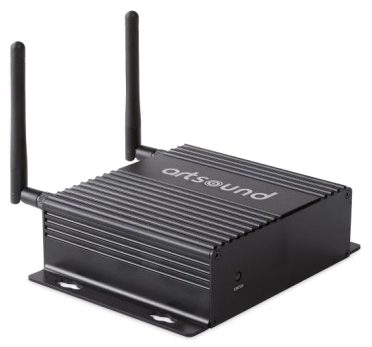
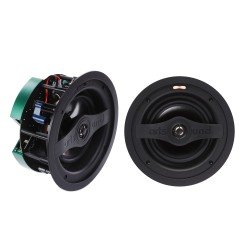
Wireless still depends on your Wi-Fi. Thick walls, several floors and detached majlis rooms can weaken the signal in exactly the rooms you want music. Check network coverage in every planned zone first. If a zone is weak, a single network cable to that room is usually a far smaller job than rewiring it for speakers.
Option 2: Surface-Mount and Low-Profile Speakers
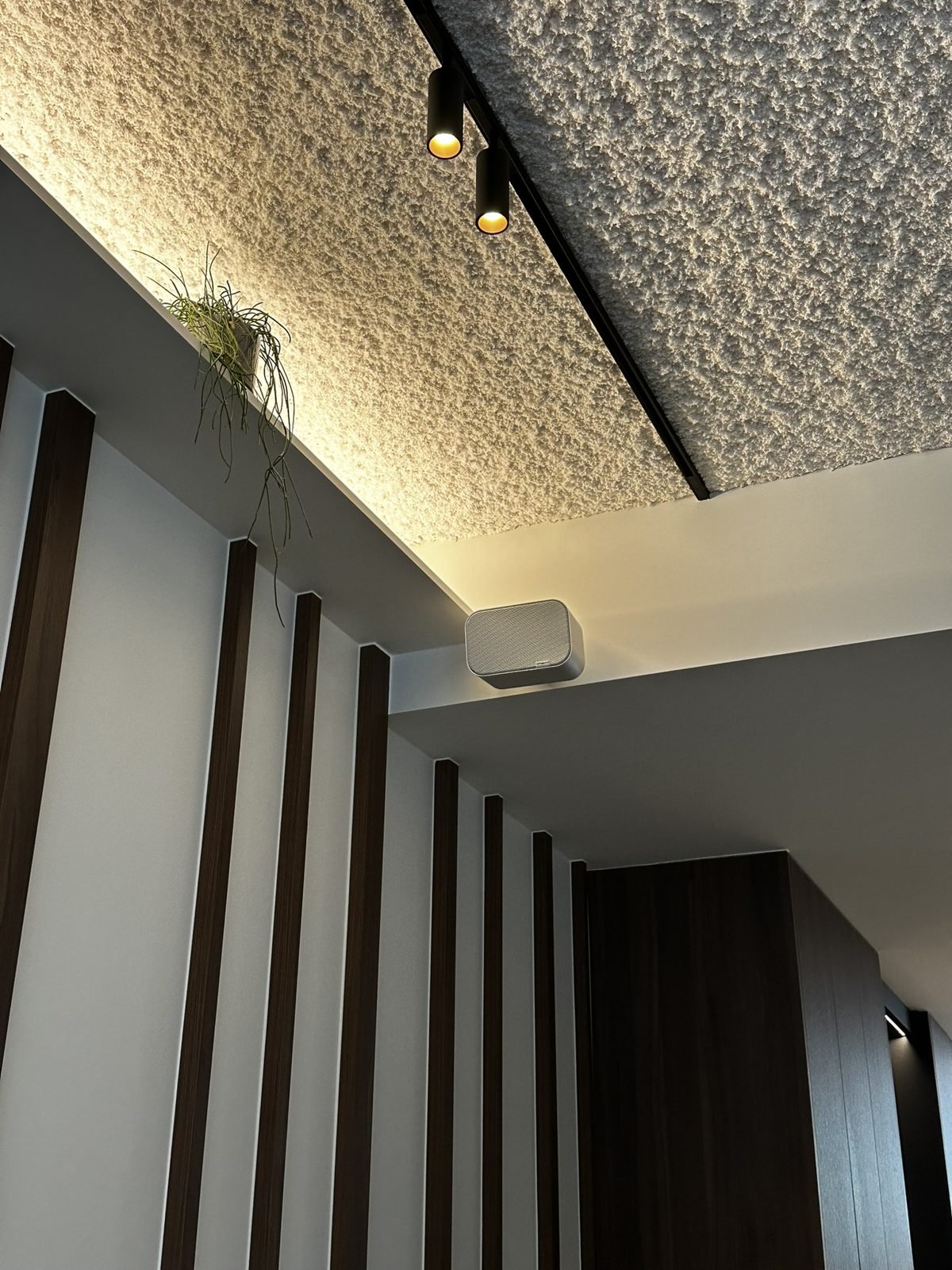
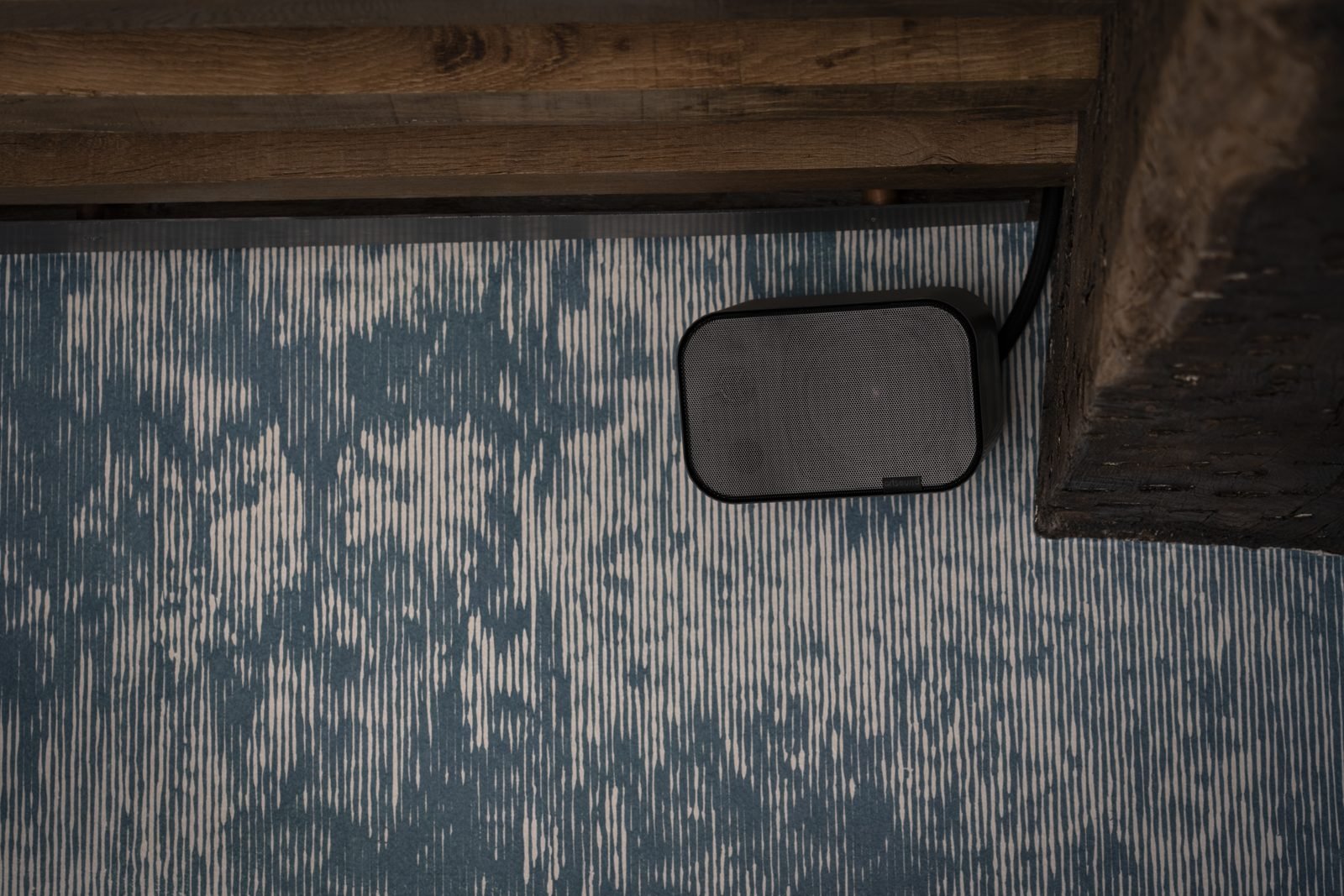
If you do not want to cut anything, speakers that sit on the surface avoid the problem entirely. For terraces, pool decks and outdoor walls, Artsound's ASW on-wall series is designed for this: the speaker mounts on the wall and the cable is hidden in trunking or behind skirting. For the outdoor side of the plan, our guide to indoor and outdoor speaker planning explains how to match speakers to each zone in the Gulf climate.
Indoors, the lowest-impact in-ceiling choice is Artsound's FLAT series: ultra-thin, frameless and paintable, so it nearly disappears into a ceiling. It still needs a cut-out, so it belongs under Option 3, but it is far less visible than a conventional speaker with a grille ring. Browse the full Artsound speaker range to compare finishes.
Cable-Routing Tricks Through Voids You Already Have
When a cable run cannot be avoided, the aim is to use space the villa already has rather than make new openings. The usual candidates are:
- Ceiling voids and false ceilings. Many villas have a gypsum or suspended ceiling with a gap above it, so a cable can be pulled across and dropped to each speaker position from above.
- Loft or roof access. Where there is a hatch to an upper void, cables can run across the top of the floor below, then down to the speaker.
- Skirting and trunking. Slim trunking along the floor edge or behind a replaced skirting board carries cable between rooms without touching the wall surface.
- Behind cornices and bulkheads. Coves and lighting recesses often leave a hidden channel along the ceiling edge.
- Existing conduits. If a conduit has a spare pull cord or capacity, a new cable can sometimes be drawn through it without opening anything. We confirm this on site, not from drawings.
None of these is guaranteed in every villa, which is why a survey comes first: we look above the ceilings and behind the skirting before recommending anything.
When a Little Opening-Up Is Unavoidable (and When It Isn't)
Retrofit does not have to mean demolition, but it is honest to say that a few things need a cut or a hole. Here is how the three approaches compare:
No Opening
Wireless Smart Family units and surface-mount speakers. Best for rented homes, quick upgrades and rooms you do not want to touch. Visible speakers, but nothing is cut.
Minimal Opening
In-ceiling speakers fed through an existing void. Only the speaker cut-out is visible. Best for living rooms, majlis and kitchens.
Targeted Opening
A small access panel or a short chase where there is no void to use. Best for zones with solid ceilings, where cable is the only way to reach the room reliably.
As a rule, you can avoid opening anything when a room can be served by a wireless unit and a power point. A small opening becomes unavoidable when you want invisible in-ceiling speakers in a room with a solid concrete ceiling and no void, or when a distant zone needs a wired network connection. Even then the work is a patch measured in centimetres, not a renovation.
The same logic applies to shops, offices and restaurants, where commercial speakers are often added to an occupied space that cannot close for weeks. Careful routing keeps the disruption short.
Planning from scratch instead? Our villa multi-zone planning guide covers the new-build route, and our Home Audio page shows the complete system options. If you want a retrofit assessed for your villa, contact Dedott.
FAQ
Can I add a multiroom sound system to a villa that's already finished?
Yes. Artsound's Smart Family range (Smart Stream, Smart Hyde, Smart Zone 4 and the SMART IN active in-ceiling speakers) is built for network streaming, so rooms can be added one at a time through the Artsound mobile app without chasing cable through finished walls. Most retrofit villas combine a few wireless zones with one or two small, targeted cable runs.
Do I have to open the walls to install in-ceiling speakers?
Not the walls. An in-ceiling speaker needs a hole in the ceiling the size of the speaker, and a power or speaker cable reaching it. In many villas the cable can travel through an existing ceiling void or loft space and arrive from above, so the visible work is limited to the cut-out. A site survey tells us which ceilings are accessible and which are not.
What are the best speaker options if I don't want any cutting at all?
Wireless Smart Family units and surface-mount speakers, such as Artsound's ASW on-wall series, need no cut-outs. A wireless streamer drives speakers you already own or add, and a surface-mount speaker sits on the wall with its cable hidden in trunking or behind skirting. The trade-off is that a surface-mount speaker is visible, where an in-ceiling one is nearly invisible.
Will wireless multiroom audio work reliably across a large villa?
It depends on the home network. Wireless multiroom audio relies on Wi-Fi, so a villa with thick walls, multiple floors or a detached majlis usually needs wired access points or a mesh network to keep every zone stable. We recommend checking coverage in each planned zone before choosing wireless over a small amount of cabling.
Can retrofitted speakers connect to lighting and shading control later?
Yes. Smart Hyde, Smart Stream and Smart Zone 4 share the same streaming platform and API, so they can be integrated with KNX, ComfortClick and other automation systems after installation. Planning the control layer early avoids paying for the same work twice.
Is a retrofit more expensive than installing audio during construction?
Usually yes for the labour, because access is harder and finishes need protecting or repairing, but the gap can be small if the design uses wireless zones and existing voids well. Pricing depends on the villa, the number of zones and ceiling access, so we scope each project after a survey rather than quoting a flat figure.